











Hot take: POCUS is the most underrated bedside manner tool in modern medicine.
We talk about point-of-care ultrasound like it’s purely diagnostic. Rule in the PE. Rule out the tamponade. Find the free fluid.
But here’s what nobody publishes:
When I sit down, put gel on a patient’s chest, and quietly scan their heart for two minutes — something happens that no AI scribe, no EMR template, no “I’m listening, just typing” reassurance can replicate.
They feel seen.
Medicine has spent twenty years putting screens between doctors and patients. Laptops on COWs. Scribes in the corner. Now ambient AI listening from a microphone clipped to my badge. Every one of these tools was sold as “freeing us up to be present” — and every one of them has, in practice, moved our hands and eyes further from the person on the gurney.
POCUS does the opposite.
It forces me to:
sit down
touch the patient
focus on their body for several uninterrupted minutes
show them, in real time, what’s happening inside them
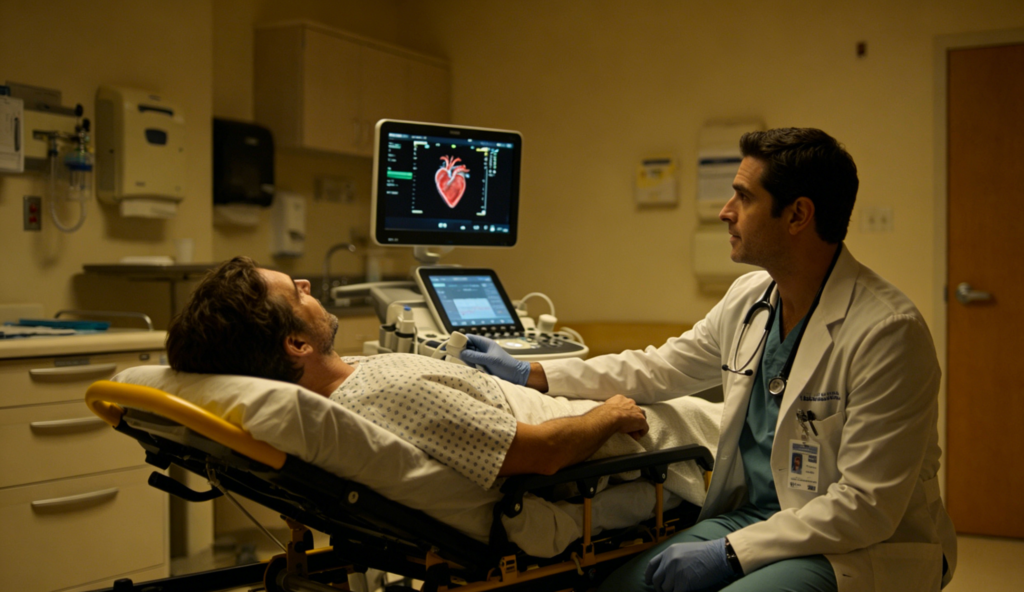
I’ve had anxious patients tear up when I show them their own heart squeezing on the screen. I’ve had chest pain patients visibly exhale when I say “your heart looks strong, your lungs are dry, there’s no fluid around the heart” — while the probe is still on their chest. That reassurance lands differently than the same words said from across the room.
And here’s the part that’ll make some of you uncomfortable:
Sometimes the scan isn’t medically necessary. And I do it anyway.
Not for billing. Not for documentation. Because a 90-second focused exam on a worried patient is often worth more therapeutically than the workup we’re about to put them through. It’s laying on of hands with a diagnostic alibi.
In the age of AI-everything, the physicians who will stand out aren’t the ones with the best prompts. They’re the ones whose patients say “my doctor actually examined me.”
The probe is the most human technology we have left.
What’s your take — is POCUS changing how your patients experience you, or am I romanticizing this?