










Understanding Ultrasound Transducers in POCUS
Selecting the right ultrasound transducer is one of the most important steps in performing an effective POCUS examination. Each probe is designed for specific depths, anatomical regions, and clinical applications.
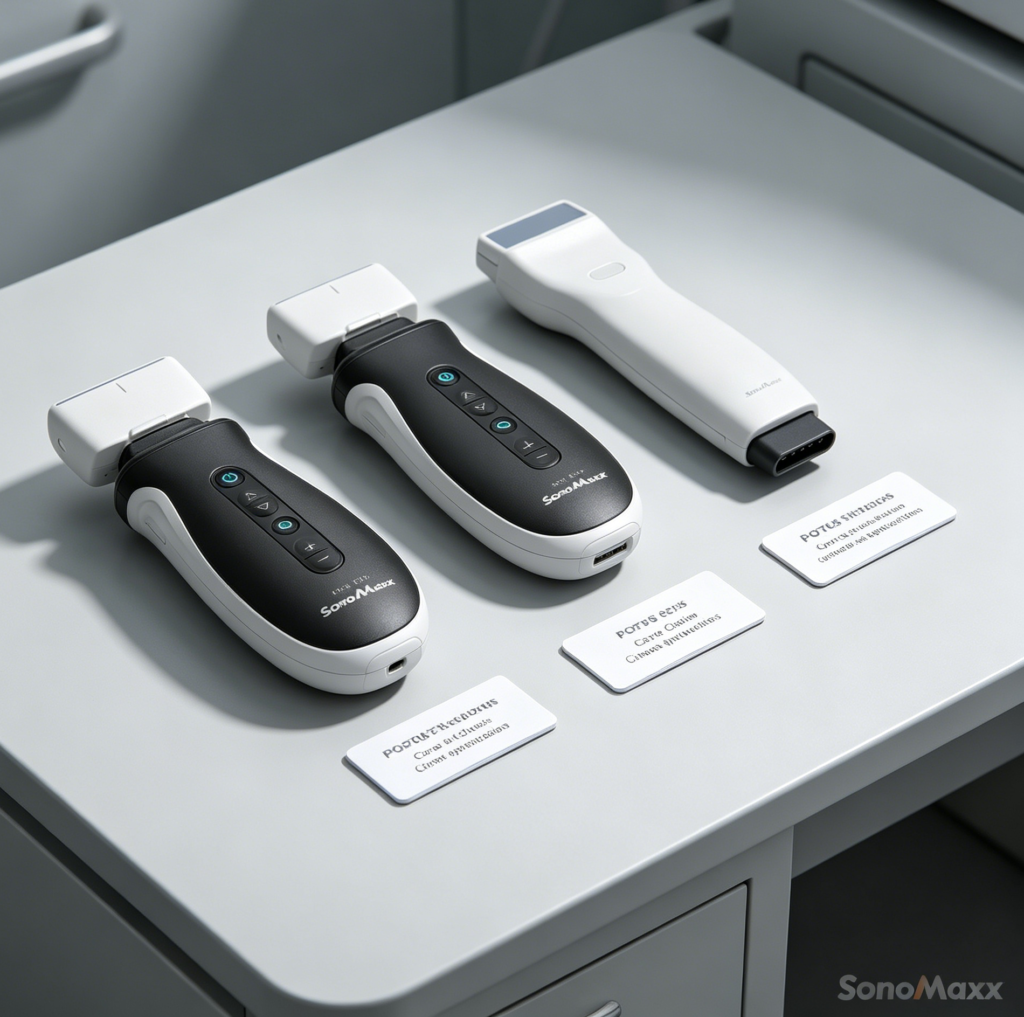
The three transducers shown in the image are considered the most essential and widely used probes in everyday POCUS practice:
• Linear Probe
A high-frequency transducer that provides excellent resolution for superficial structures. Commonly used for vascular access, soft tissue assessment, lung ultrasound, musculoskeletal imaging, thyroid evaluation, and DVT examinations.
• Curvilinear (Convex) Probe
A lower-frequency transducer that allows deeper tissue penetration. Frequently used for abdominal scans, FAST examinations, kidney and bladder assessment, fluid evaluation, and obstetric applications.
• Phased Array Probe
A small-footprint transducer designed for imaging between the ribs. Primarily used for cardiac POCUS, hemodynamic assessment, pleural evaluation, and critical care applications.
Although many additional ultrasound transducers exist, including endocavitary, microconvex, hockey-stick, TEE, and 3D/4D probes, these three remain the core transducers of modern POCUS because they cover the majority of bedside clinical examinations.
At SonoMaxx, we believe that high-quality POCUS education should be combined with accessible ultrasound technology and hands-on clinical training. Understanding the strengths and limitations of each transducer is a key step toward improving scanning confidence, image acquisition, and bedside clinical decision-making.